Tuesday, July 3, 2007

Budgeting Beside Billionaires: Financial Tips for Surviving Life in Manhattan


New York City is a tough and expensive city to live in. Everyone knows this. Yet, you can’t walk two blocks without seeing a Chinese delivery guy with a missing eye or an insane woman with hands darkened by months on the streets. The truth is, among the limousines and thin socialites with vested poodles, there are plenty of poor people in Manhattan. While looking for a job the past two months I turned to these people for tips on how to survive my own financial struggles in the one of the world’s most expensive cities. Here are some strategies I’ve learned:

(1) Sidewalk Furniture: Every Saturday and Sunday, particularly at the beginning and end of every month, the sidewalks of Manhattan fill with trash left behind by people changing addresses. Often, this garbage is full of great stuff – all for free. From oscillating fans and ceramic lamps to end tables and love seats, the sidewalks are Manhattan’s best deal for furniture and household items. When I first arrived here, I walked down the sidewalks and thought, “I have a Masters degree in Writing. I don’t fill my apartment with trash.” Then I got tired of watching the trilingual Ukrainian nuclear physicists with a PhD in Thermodynamics walking past me with the nightstand and coffee table I wanted but was too stuck-up to wrestle from the tangle of sidewalk garbage. Now we fight over bookshelves every weekend. “Ryvok” is Ukrainian for “asshole.”

(2) Creative Financing: For a while I needed to watch every penny I spent, which created a dilemma. My niece graduated from high school, and, as her uncle, it was my job to show how proud we all were of her. So I sent her a card and a check for $50. But I wasn’t sure if I was going to have enough money to cover the check. If only she would wait a month to cash it; things would be OK by then. But I couldn’t ask her to postpone the transaction; that would be tacky. So in the “Memo/For” section at the bottom left of the check I wrote “Strange Rash Medication.” I knew it would take her a few weeks to work up the courage to deposit a check like that. She cashed it within 48 hours. Kids today have no sense of shame. I mean, really.

(3) Pizza: Americans decry our obesity epidemic and spend billions attempting to understand what went wrong and where. It’s quite simple. A bag of “organic” carrots costs $6.78 while a huge slice of cheese pie (pizza to you and me) and a Coke costs $3.50. Any culture that makes a side dish of vegetables yanked from the ground twice as expensive as a meal you actually have to make and cook is doomed to be fat. I ate pizza every day for nearly a month. I was being economically responsible. Once I hit it rich I plan on joining an expensive gym so I can work off my leaner financial days. Nevertheless, a slice of pie and a Coke from the local pizza joint remains the best bargain for food in the Manhattan. Not even the food cart guys will argue with that.

(4) Central Park: Central Park is one gigantic, green therapy couch for New York City. It’s where New Yorkers go to get their psychological lives straightened out. After a particularly stressful day, my friend sent me this advice in an email, “Go to Central Park and scream at the top of your lungs. Keep screaming until you feel better. No one will think it’s weird. I promise.” Unfortunately, Central Park is like that one friend we all have who will always be known for a particularly bad or crazy period in their lives. You agree to meet for lunch and wait for them to show up nude and start screaming and throwing bottles of ketchup at bystanders. When, in fact, that time in their lives was thirty years ago and they are now just as kind and normal as anyone else. Whenever I tell people back home “I go for a run at the reservoir in Central Park at dusk” they respond as if I’ve just told them I’m marrying a hooker. “Are you out of your goddamned mind?” For the record, I have never been mugged or raped in Central Park, but I did see Katie Couric there. Fortunately, New Yorkers don’t give a shit what other people think about their beloved Central Park. It’s this not giving a shit about what people think that makes many think New Yorkers are rude. It’s what I like best about them. And when you’re in Central Park, whether you are playing softball, attending a free Italian opera, or simply lying in the grass and watching the sun set on the darkening Manhattan skyline, you feel part of something much bigger, and much greater, than yourself. All for free.

(5) The Buy-Back: I’m the first person to admit that people who are struggling financially should not spend time in bars. But let’s face it: poverty and booze go together. When you wake up knowing the pending day is gong to kick your ass, you develop a thirst for beer by mid-afternoon. There are times when indulging is not only permissible, but healthy. And no city knows how to party more than New York City. If you patronize your neighborhood watering hole, and you’re not a total asshole, chances are you’ll get a “buy-back” every now and then. This is when say, after two beers, the bartender makes his or her hand into a fist and taps the bar two or three times. This is code for, “Your next drink is on the house.” Sometimes they just slide you a coaster. This is the greatest customer appreciation campaign I have ever encountered; the savings really do add up over time. When you hear people say, “New York is the greatest city in the world,” this is what they are talking about.

(6) Metro, The Village Voice, and AM New York: At a time when publishing “experts” are debating the future of print newspapers and online media, the financially-strapped New Yorker can keep abreast of the latest international and local news, as well as recent sports, art, and entertainment developments, by reading one of the many free newspapers at their disposal. On days when you have more time than money, grab a copy of each publication and find a nice spot in Central Park to read. Enjoy all the daily news while taking breaks to people watch and contemplate the various buildings looming over the trees. Or read while nursing a cup of coffee in the air-conditioning for a few hours at one of the 4.7 million Starbucks in Manhattan. And when your financial-planning, Ivy League friends want to discuss the latest headline news, you can nod your head knowingly and say, “Yes, yes. I know all about Paris Hilton... She doesn’t have a job either.”

Personal Update: I have accepted a job as an editor at a company located near Union Square. I couldn’t be happier. Thanks to all those who offered support and encouragement during the past two months. People who have been employed without interruption for the past ten years dream about not having to go to work. In reality, not having a stable job is a nightmare. Recently some acquaintances were encouraging me to take advantage of all the wonderful things you can do for free in New York City, like the concerts in Central Park. They didn’t know I explored Central Park earlier that day and thought, “If I bought a baseball uniform and hung around the baseball fields, I could probably live there without anyone noticing.” That may seem a little paranoid, but hey, it’s New York City – anything can happen. The Chinese delivery guy missing an eye, the insane woman, the Ukrainian physicists, Katie Couric, and I all know this first-hand. It’s why we live here.

New York City Offers Plenty of Free Publications

Friday, June 15, 2007

The New York City Sidewalk Fee & Central Park Sasquatch: All for a Mere $18.07, UES


Though New Yorkers pay exorbitant rents to stay out of the sweaty-armpit city heat and saliva-freezing winters, they also spend plenty of money just to go outside. Manhattan-ites endearingly call this charge the New York City Sidewalk Fee.

“It works like this,” a friend of mine explained at a party on the Upper West Side. “Every time you leave your apartment take out $20 and leave it on the sidewalk. Then walk away.”

“Huh?” After a couple beers I always assume any apparent breakdowns in logic are entirely from my end. “I don’t get it. Why would anyone do that?”

He shook his head as if he were about to deliver some horrible news. “You don’t have a choice. It’s just part of life in New York City. You walk out of your apartment building, and you spend $20 no matter what. Even if you’re just going out for a newspaper.”

“Where does the money go?”

“No one really knows, but most people suspect the sidewalk.”

“Hence the name,” I nodded and pointed my Sam Adams at him, showing off that I made the connection.

“Exactly,” he said, pointing his Corona at me.

To be honest, I thought my friend was messing with me. Like the disheveled woman who told me Sasquatch had been spotted several times in Central Park this spring. I’m pretty sure she was just crazy. But the idea is not absurd; people fly-fish in Central Park, and everyone knows that Sasquatch lives in the type of environment where people go fly-fishing. I actually might have seen him the other night pushing a shopping cart down Lexington Avenue.

Anyway, I spent several days this past week darting out of my apartment building, touching the sidewalk, and then racing back inside. Panting in the stairwell, I checked my wallet. Sure enough, I had lost on average $18.07 each time. It was unbelievable. I called my friend to tell him.

“But it wasn’t $20,” I said. “More like $18.”

“That’s because you live on the Upper East Side,” he said. “It’s cheaper.”

It’s true. The Upper West Side is a little more expensive, and so are their sidewalk fees. That’s probably why Sasquatch and the crazy lady hang out on the sidewalks near me.

Sasquatch Seen Heading Toward 79th St. After Guzzling Several Beers at The Boathouse in Central Park

Wednesday, May 30, 2007

New York City’s World Famous Regular Freaking Mother F**kers


Goodbye air mattress. Looks like I’m here to stay.

Buying a mattress is like getting divorced: you reveal intimate details to complete strangers and then hand them lots of money. I love the movie "Punch Drunk Love" because the bad guy, played by uber-talented Philip Seymour Hoffman, runs a mattress store. The perfect venue for shady characters, evil schemes, and dubious contraptions – like the “Sleep Profile” machine I reluctantly lie down on.

Leonard, the mattress salesman with the complexion of a grapefruit, leans over my face. “How many people sleep in your bed?”

In New York City you learn quickly that everyone exaggerates everything. The pizza joint across the street serves “Famous” pizza; the shop next to it serves “World Famous” bagels. Even the drug dealers have Zagat Ratings. I’ve bumped into a few of their satisfied customers. I don’t think I’ll ever understand the connection between smoking crack and calling people “mother f**ker.” Crack heads are certainly an exasperated bunch.

“God dammit!” this Yankees fan yells as a table full of Mets fans celebrate. I’m from Virginia and don’t follow baseball as closely as New Yorkers do. And I don’t know where the geographical or social line is drawn between Yankees and Mets fans, but I’m guessing Ugly Betty is a Mets fan. Not being able to talk baseball in this city is like not being able to hail a cab. Not knowing Alex Rodriguez’s batting average solicits comments like, “What are you a freaking tourists? You must freaking be lost. The Naked Cowboy is like 40 freaking blocks from here.”

I bet the Naked Cowboy has no problem answering questions from asses like mattress salesmen. “As many women as I can fit in my bed,” I imagine him saying. “After all, I’m freaking famous.”

“Nationally acclaimed” is how I recently described my book in a cover letter in my desperate search for employment. I really don’t even know what the phrase means, but I grew tired of underselling myself in this incredibly competitive city. In order to stand out, in order to get the job, you need to be famous on some level, even if it’s in your own head. I’ve interviewed on NPR. My book was reviewed by The Wall Street Journal, The Washington Post, The Miami Herald, and even USA Today. I’m definitely more famous than the pizza across the street.

So I wasn’t too surprised when, exiting the local Starbucks, this vaguely familiar face looked at me with discernable concern. Maybe he recognized me from an interview or the internet. Maybe he was too nervous to ask me for my autograph. I was impressed by his sense of boundaries. Finally, an average Joe in Manhattan. A nobody.

About two blocks later I put a uniform, and then a name, to the face: Alex Rodriguez.

The odd thing about New York City is that it’s a place where famous people just want to be normal and normal people just want to be famous. Yet this overwhelming city has a way of making everyone equal amid its fire escapes, street corners, and stairwells.

The mattress salesman. The baseball player. The Naked Cowboy. The crack heads. The baseball fans. The struggling writer.

In New York City, it feels great to be a regular freaking mother f**ker.

Cubicle Life Conundrums #3: Hygiene & Cleanliness


We all know people smell. It’s why we take showers and have bathrooms in our homes. And that’s where most hygiene-related matters belong: in your personal bathroom.

Don’t bring your grooming habits to work. Sure, applying your makeup or clipping your toenails in your cubicle may result in an extra fifteen minutes of sleep, but it also may make working next to you a total nightmare.

Remember: Not smelling begins at home, but keep a stick of antiperspirant in your cubicle just in case.

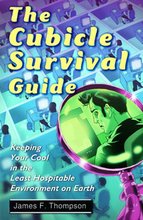
I write in “Chapter Six: Hygiene” of The Cubicle Survival Guide: Keeping Your Cool in the Least Hospitable Environment on Earth

“Many people think that body odor was eradicated about the same time the feudal system was deemed no longer effective as a way to organize human beings. Though today serfs no longer have to pay fiefs and castles are little more than tourist traps where wealthy newlyweds spend their honeymoons, body odor is still very much part of human existence…

No one really knows what smelly people are thinking. Do they know they smell and just not care? Or do they have no idea that they smell? Don’t they have loved ones to inform them that they smell? Don’t they realize that being smelly in the cubicle community is not only a professional death wish but also a major aggravation for co-workers? How, after all, do you politely and professionally tell someone they stink? Really. How can you not know you smell? It’s like being on fire.”

After months of research and interviews, I compiled a list of strategies in The Cubicle Survival Guide that employees can use to combat, deter, and repel smelly neighbors. From uncapped deodorant sticks and small fans to making your cubicle appear like a hospital supply dumping ground, learn how to put smelly employees where they belong – by themselves.

For example:

Melinda Spring should have been an Avon Lady. Yet, for full dental and low monthly premiums, she works next to smelly Harold Kennedy instead. Melinda keeps what she calls a “shadow cabinet” in her cubicle: an extra bottle, tube, and container of every nail polish, moisturizing crème, and eye cleanser she has in her bathroom at home.

“I know it’s a little over the top,” she tells her colleagues. “But trust me. Working next to Harold, I need a full arsenal.”

“Hey, Melinda,” Harold says, leaning his elbow on her cubicle wall, his fingernails black with dirt, his armpits stained with damp sweat circles; shreds of meat are lodged in his teeth from yesterday’s brisket. “I think we should discuss your choice of font in the April newsletter.”

“Sure,” Melinda says, turning her small, electric fan on high and pointing it at Harold. “I’d love to hear what you think about the font.” She retrieves a can of hair spray from her desk drawer and, while poking at her hair, shoots it at the fan. A swarm of fragrant and sticky molecules envelop Harold and cling to him, stinging his skin.

“Oh god!” he screams. “What the hell is that stuff?” Harold grabs his throat as it swells shut.

Melinda notices Harold bend over, gasping for air. She repositions the fan and shoots the hairspray again. Harold spins, almost falling down.

“Harold!” Melinda says. “Are you okay? Maybe you should get some air and send me an email later.”

Thursday, May 3, 2007

Welcome To New York


If you move to New York City one of the first things you will notice is how often the people here say, “Welcome to New York.” It’s almost like they are programmed to say that. As if everyone who lives here had to take a hospitality class on how to greet newcomers.

But after hearing this endearing phrase a few times, you notice it’s not how your grandmother in Nebraska says, “Welcome.” It’s more like how you would imagine Stephen King would say “Welcome” if you were ever invited into his house. Toothy, friendly, but weird and a little scary.

I’m beginning to understand that “Welcome to New York” means exactly what it is supposed to mean, but also has, much like the city itself, so many complex layers of meanings and connotations that it’s difficult to determine exactly which one is intended for you. Just about every “Welcome to New York” you hear is different.

For example, the other night I had dinner at a Cuban restaurant with a friend who lives here and her boyfriend. At the end of the meal they insisted that I not pay. Dinner and drinks was on them. “Welcome to New York,” they said. I took that to mean welcome to their home city of which they are very proud, and that I should save my money, because I was going to need it. A very nice, practical, and much appreciated gesture. Turns out I did need the money. And then some.

Upon entering my apartment for the first time I noticed there was a perfectly round hole above the doorknob. Obviously, it was for a bolt lock. But there was a bolt lock about ten inches above the hole that seemed to work just fine once I figured out which way to turn the key. It didn’t take long before the resident manager knocked on my door to tell me that I couldn’t have a hole in my door. It wasn’t safe.

So I visited the local locksmith and the next morning a nice, portly man arrived with a heavy tool box containing two options (1) the low tech lock with a regular key, which criminals can duplicate should they find themselves in possession of it, or (2) the high tech lock that comes with something like a credit card that requires stores to seek your permission before making a copy of the very fancy-looking key.

The first option, including parts and installation, would run about $300. The second option, including parts, installation, and the comfort of knowing you finally have a lock that criminals probably can’t get past, would cost more than $500. I disbelievingly looked at the locksmith.

“Welcome to New York,” he said.

I took the first option because I normally carry my laptop wherever I go. Otherwise there is nothing in my apartment worth stealing, unless air mattresses are fetching a high price on the streets these days. But just in case they are, I now leave a sign in my apartment that reads, “Dear intruder. There is an air mattress in the bedroom and some Canadian bacon in the fridge. Otherwise, you’re out of luck. They only thing in this apartment worth stealing are the locks, and if you’re reading this note, then they are apparently worthless. Oh well. Welcome to New York.”

My Three Locks

Wednesday, April 25, 2007

Cubicle Life Conundrums #2: Phone Manners


Cubicle Life Conundrums #2: Phone Manners – Tell Us More About Your Hemorrhoids and Cheating Boyfriend

Sure, everyone gets caught up in the moment. We lash back at the mother-in-law for pointing out spots on our silverware. We say I love you at the end of the third date in hopes of getting some action. When the police pull us over for speeding, we say the “f” word in front of our children.

When the intensity of a moment overpowers our sense of discretion, trouble often ensues. The same principle applies to your phone conversations at work. When speaking with your dismissive doctor, lying significant other, or drug-addled lawyer don’t allow your passions to sabotage your commitment to being a professional. Uncontrolled bursts of emotion can humble even the most intelligent and respected cubicle inhabitant.

“She cheated on me! What do you mean she wants the jet ski and the car! She can’t swim or drive a stick! Huh? What the hell is repressed motor skill recall?”

Remember: When at work, your employer owns your right to privacy.

I write in Chapter 3, “On the Phone” in The Cubicle Survival Guide: Keeping Your Cool in the Least Hospitable Environment on Earth:

“When America’s founding fathers penned the US Constitution and the Bill of Rights, they had no idea that one day entire generations of Americans would spend most of their productive years crowded into tiny spaces beneath glaring lights divided by carpeted walls. Forget the Patriot Act; how many rights to privacy and self-expression do we forfeit for the sake of corporate political correctness, institutionalized homogeneity, and a secure paycheck? Live free or die, but whatever you do – don’t rock the company boat with personal or embarrassing information. Not if you want to sail in the seas of steady income and health insurance...”

It’s easy to commit professional suicide by being socially inept at work. For some reason employees across the globe don’t know when to lower their voices or simply shut up. In the old days cell phones were called mobile phones, which means people had enough sense to move around while carrying on a conversation. Today people will answer their cell phone in their cubicle and talk about the color of baby feces:

“Green and blue? Really, Hilda? The little tiger must be eating crayons again. Just give him a Flinstones vitamin and please don’t forget to clean behind the entertainment center. SpongeBob SquarePants is behind there somewhere.”

Unfortunately busy parents, your hypochondriac cube neighbor, and that doomed marriage Elizabeth three cubes down keeps trying to resurrect over her office phone, are part of the cubicle life. If you just can’t take it anymore, find somewhere private to maturely and professionally address the offender with your concerns. Otherwise earplugs and white noise techniques are reasonable options.

However, keep in mind that the most effective means of promoting good phone etiquette is by personal example. And it will prevent you from being a hypocrite if you ask a coworker to tone down their personal phone conversations. Here are some things you can do to be a role model for phone manners in your cubicle community:

Speak in general terms: “Can you elaborate on why that is necessary?” sounds much better than “Can you tell me why a rash requires all sorts of expensive pills and crèmes?”

Keep the conversation brief and set up a contingency plan: “Thanks so much for the phone call. I really appreciate it. We’ll catch up this weekend when I’m not at work so we can really talk” is better than “Thanks so much for the phone call. I really appreciate it. So, how is your Uncle Jed? Is he out on parole yet or did that last drug bust stick?”

If you must field the phone call, take it for a walk: “Thanks for letting me know. Let me get your number and I’ll call you back in a minute from my cell (somewhere more private)” is much better than “Thanks for letting me know. Actually, my boyfriend is paying for it so I’ll have to ask if he likes the silicone option.”

Answer with “Yes” or “No” when possible: “Yes” or “No” is a much better answer to “Honey, did you put the vinaigrette dressing in the pantry again?” than “Who cares. So I forgot that it belongs in the refrigerator after opening it. Are you really going to bother me about this or is there something else in our relationship that you want to argue about?”

Best regards, James F. Thompson

Sunday, April 22, 2007

We Are The Virginia Tech Hokies


When lost in the wilderness an individual should do one essential thing to survive: nothing. Don’t go searching for help. Don’t retrace your steps. Don’t make a screwed up situation worse by letting your emotions overtake your sensibilities. Wait for help to come to you. Others will arrive and the nightmare will end.

That’s what I have been doing this past week: nothing. I was too numb to do anything else. Until now, I haven’t written a single word. Readers of this blog know that Part 2 of Cubicle Life Conundrums: Phone Manners, was supposed to be published last Monday, April 16, 2007. I never got around to finishing it. I couldn't.

The incomprehensible tragedy at Virginia Tech rendered me lost. Lost in my understanding of people. Lost in my understanding of society. Lost in my understanding of the world. The landmarks and boundaries by which I guided my life were destroyed.

I graduated from Virginia Tech as an English Major. It’s where I learned to think critically and write. It’s where I made some of my best friends. It’s where I failed organic chemistry. At Virginia Tech, I saw who I was going to be, even if then I was far from being the man I am now.

Virginia Tech was, and still is, a place where people dedicate their lives to helping students achieve happiness in their futures. It is a place of love, which makes those full of hate feel threatened. And that’s not our fault.

In the wake of April 16 we felt despair, helplessness, and shock; sentiments often expressed through the confused and awkward silence of sudden, acute grief – that quiet, impossible emptiness. We were lost, but we didn’t lose ourselves. Help was on the way. And it came.

Prayers. Tears. Thoughts. Hugs. Maroon. Orange. Candles. Rivals. Vigils. Concern. Donations. Compassion. Over and over again. From UVA to Uruguay and elementary schools to professional baseball teams, people came to help us – which meant they had to join us. Share our pain. And they did in every way physically, emotionally, metaphorically, and spiritually possible.

Of course, help couldn’t change what had happened, but it can change what will happen… if we pull together, not to save each other, but to heal each other.

It was then that I realized that Virginia Tech wasn’t lost in the world. And neither was I. It was the world that had changed around us. But it didn’t change what is in us. Not by a long shot.

We are Virginia Tech.

Now more than ever: Let’s go, Hokies.